
Smart AI tool for Arabic text correction

The Dagger Alef (الألف الخنجرية): Why It's Hidden and Where It Appears

A complete guide to one of Arabic's most interesting orthographic phenomena, the words that contain a long /aa/ sound that is not written as a full alef, and how to stop making the spelling mistakes it causes.

If you have ever wondered why هذا is spelled without an alef between the ه and ذ even though you clearly pronounce a long /aa/ there, the answer is the dagger alef (الألف الخنجرية). It is a historical alef that was dropped from everyday script centuries ago to speed up writing, but the pronunciation was never lost. The alef is still there, it is just invisible unless the word is written with full diacritics.

💡
Spelling check: Writing هاذا or الرحمان or ثلاث with an extra alef is a very common spelling error. Paste your text into Sahihli to catch this and other orthographic errors. Our guide to the top 10 Arabic spelling mistakes covers related issues including alef and hamza errors.

What Is the Dagger Alef?

The dagger alef (ٰ, Unicode U+0670) is a small vertical stroke written above a letter to indicate a long /aa/ vowel that is not written as a full alef. It appears only in fully vowelled Quran text, classical scholarly editions, and some pedagogical materials. In everyday Arabic writing, it is omitted entirely, and the reader must know which words contain it.

The Most Common Words with a Hidden Dagger Alef

These are the words where the dagger alef causes the most spelling mistakes, because writers who do not know about it try to "fix" the perceived missing alef by adding one.

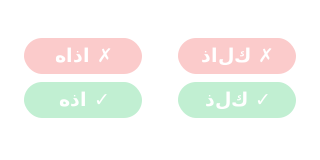
Word❌ Wrong spelling✅ Correct spellingMeaning
هذاهاذاهذاThis (masc.)
هذههاذههذهThis (fem.)
ذلكذالكذلكThat (masc.)
اللهالإله / الالهاللهGod
الرحمنالرحمانالرحمنThe Most Gracious
لكنلاكنلكنBut / however
أناأنا (✓ correct as-is)أناI (the alef here is written)
ثلاثةثلاثهثلاثةThree (the alef here is written)
⚠️ Most dangerous error: Writing ذالك (with alef) instead of ذلك is one of the most noticeable spelling mistakes in Arabic. The dagger alef in ذلك is between ذ and ل, not between ذ and ا. There is no written alef in this word.

Where the Dagger Alef Appears in the Quran

In Quran text with full diacritics, the dagger alef is written explicitly above the letter that carries it. This allows readers to see exactly where the hidden long vowel is.

Quran spellingEveryday spellingWhere the dagger alef is
هَٰذَاهذاAbove ه
ذَٰلِكَذلكAbove ذ
ٱلرَّحْمَٰنِالرحمنAbove م
لَٰكِنلكنAbove ل

Other Words with Irregular Alef Spelling

Beyond the dagger alef cases, Arabic has other words where the alef is spelled differently from how it sounds. These are not dagger alef cases, they are simply historical orthographic conventions that must be memorised.

WordNote
الصلاةWritten with alef after ص, pronounced as laa (not laah)
الزكاةWritten with alef after ك
طهName of a surah, ط carries a dagger alef in Quran text

The Spelling Rule to Memorise

For everyday writing, the simplest approach is to memorise the most frequent dagger alef words as a closed list and never add an alef to them. The principle is: if the word is traditionally spelled without a visible alef, do not add one. Trust the shape of the word, not your instinct to "fix" it.

The short list to know: هذا، هذه، هؤلاء، ذلك، تلك، أولئك، الله، الرحمن، لكن، إله. Memorise these spellings and you will avoid 90% of dagger alef errors in everyday writing.

Frequently Asked Questions

Why is the alef missing from هذا and ذلك?

These words contain a dagger alef, a historical long vowel dropped from everyday writing centuries ago as a scribal shorthand. The vowel is still pronounced but no longer written. Native readers recognise these words by shape.

Is it wrong to add a regular alef to words like الرحمن and هذا?

Yes. Writing الرحمان or هاذا adds a visible alef that should not be there. These words are spelled without a written alef because the alef is the invisible dagger alef. Adding one is a spelling error.

الألف الخنجرية: لماذا تُخفى وأين تظهر

دليل شامل لإحدى أكثر الظواهر الإملائية إثارةً في العربية، والكلمات التي تحمل صوت /آ/ مطولاً غير مكتوب بألف ظاهرة، وكيف تتخلص من الأخطاء الإملائية التي تسببها.

إن تساءلت يوماً لماذا تُكتب «هذا» بلا ألف بين الهاء والذال مع أنك تنطق مداً طويلاً هناك بوضوح، فالجواب هو الألف الخنجرية. إنها ألف تاريخية حُذفت من الكتابة اليومية منذ قرون لتسريع الكتابة، لكن النطق لم يُفقد أبداً. الألف موجودة، لكنها خفية، ولا تظهر إلا في النص المشكول الكامل.

💡
فحص إملائي: كتابة «هاذا» أو «الرحمان» بإضافة ألف ظاهرة من أكثر الأخطاء الإملائية شيوعاً. الصق نصك في صححلي لرصد هذا وغيره من الأخطاء الإملائية. ودليلنا عن أشهر عشرة أخطاء إملائية في العربية يغطي مسائل ذات صلة كأخطاء الألف والهمزة.

ما الألف الخنجرية؟

الألف الخنجرية (ٰ، Unicode U+0670) شرطة رأسية صغيرة تُكتب فوق الحرف للدلالة على مدٍّ طويل /آ/ لا يُكتب ألفاً كاملة. لا تظهر إلا في نص القرآن الكريم المشكول الكامل، والطبعات العلمية الكلاسيكية، وبعض المواد التعليمية. وفي الكتابة العربية اليومية تُحذف كلياً، ويجب على القارئ معرفة الكلمات التي تحتويها.

أشيع الكلمات ذات الألف الخنجرية المخفية

هذه هي الكلمات التي تُسبب فيها الألف الخنجرية أكثر الأخطاء الإملائية، لأن من لا يعلم عنها يحاول "تصحيح" الألف المفقودة بإضافة واحدة.

الكلمة❌ إملاء خاطئ✅ إملاء صحيحالمعنى
هذاهاذاهذااسم إشارة للمفرد المذكر
هذههاذههذهاسم إشارة للمفردة المؤنثة
ذلكذالكذلكاسم إشارة للبعيد المذكر
اللهالإله / الالهاللهلفظ الجلالة
الرحمنالرحمانالرحمناسم من أسماء الله الحسنى
لكنلاكنلكنحرف استدراك
⚠️ أخطر الأخطاء: كتابة «ذالك» (بألف ظاهرة) بدلاً من «ذلك» من أكثر الأخطاء الإملائية لفتاً للنظر في العربية. الألف الخنجرية في «ذلك» تقع فوق الذال، لا بين الذال والكاف. لا توجد ألف مكتوبة في هذه الكلمة.

حيث تظهر الألف الخنجرية في النص القرآني

في نص القرآن الكريم المشكول الكامل، تُكتب الألف الخنجرية صراحةً فوق الحرف الذي تعلو عليه، فيستطيع القارئ رؤية موضع المد الخفي بدقة.

الرسم القرآنيالرسم اليوميموضع الألف الخنجرية
هَٰذَاهذافوق الهاء
ذَٰلِكَذلكفوق الذال
ٱلرَّحْمَٰنِالرحمنفوق الميم
لَٰكِنلكنفوق اللام

كلمات أخرى ذات إملاء مختلف للألف

إلى جانب حالات الألف الخنجرية، تضم العربية كلمات أخرى تُكتب فيها الألف بشكل مختلف عن نطقها. وهذه ليست من حالات الألف الخنجرية، بل هي أعراف إملائية تاريخية يجب حفظها.

الكلمةملاحظة
الصلاةمكتوبة بألف بعد الصاد، منطوقة لا مطولة
الزكاةمكتوبة بألف بعد الكاف
طهاسم سورة، الطاء تعلوها خنجرية في النص القرآني

قاعدة الإملاء التي يجب حفظها

في الكتابة اليومية، أبسط نهج هو حفظ الكلمات الأكثر شيوعاً ذات الألف الخنجرية كقائمة محدودة، وعدم إضافة ألف إليها أبداً. المبدأ هو: إن كانت الكلمة تُكتب تقليدياً بلا ألف ظاهرة، فلا تُضفْ إليها واحدة. ثق بشكل الكلمة لا بغريزتك في "تصحيح" ما تظنه خطأ.

القائمة القصيرة للحفظ: هذا، هذه، هؤلاء، ذلك، تلك، أولئك، الله، الرحمن، لكن، إله. احفظ هذه الأشكال الإملائية وستتجنب 90% من أخطاء الألف الخنجرية في الكتابة اليومية.

أسئلة شائعة

لماذا غابت الألف من هذا وذلك؟

هذه الكلمات تحمل ألفاً خنجرية، مدٌّ طويل تاريخي حُذف من الكتابة اليومية منذ قرون لتسريع الكتابة. النطق لا يزال موجوداً لكن الرسم حُذف. القراء الأصليون يعرفون هذه الكلمات بشكلها.

هل من الخطأ إضافة ألف إلى كلمات كالرحمن وهذا؟

نعم. كتابة «الرحمان» أو «هاذا» يُضيف ألفاً ظاهرة لا وجود لها. هذه الكلمات تُكتب بلا ألف مرئية لأن الألف خنجرية مخفية. إضافتها خطأ إملائي.