
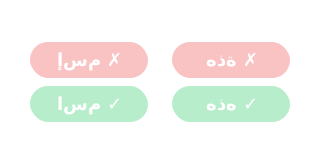
Arabic is one of the richest and most precise languages in the world , but it contains spelling rules that confuse many people. Whether you're a student, a writer, or someone writing daily emails, these errors appear regularly, and most can be avoided by knowing one simple rule.
1. Confusing Hamzat al-Wasl with Hamzat al-Qat'
Hamzat al-qat' is always pronounced and written with a hamza above or below the alef (أ / إ). Hamzat al-wasl drops when connected mid-sentence and is written as a plain alef (ا). This is the single most common Arabic spelling error , read our complete guide to hamza for every case broken down.
| ❌ Wrong | ✅ Correct | Reason |
|---|---|---|
| إسم | اسم | Hamzat al-wasl , drops when connected |
| إبن | ابن | Hamzat al-wasl |
| اكل (verb) | أكل | Hamzat al-qat' , always pronounced |
| اعطى | أعطى | Hamzat al-qat' |
2. Taa Marbuta (ة) vs Haa (ه)
The test: add tanween , if you hear a "t" sound, write ة. Otherwise write ه.
| ❌ Wrong | ✅ Correct |
|---|---|
| مدرسه | مدرسة |
| طالبه | طالبة |
| هذة | هذه |
3. Final Alef: Maqsura (ى) or Mamduda (ا)?
Convert to present tense: if a waw appears (يدعو) write ا; if a yaa appears (يمشي) write ى.
| ❌ Wrong | ✅ Correct | Root |
|---|---|---|
| دعى | دعا | Waw root: يدعو |
| مشا | مشى | Yaa root: يمشي |
4. ال Must Stay Attached
The definite article ال is always written directly attached to the following noun with no space: ال كتاب → الكتاب.
5. إنَّ vs أنَّ
إنَّ (kasra) opens a standalone sentence: «إنَّ العلمَ نور». أنَّ (fatha) follows a verb: «علمتُ أنَّ الامتحانَ صعب».
6. لا Written Separately
لا is always a separate word: «لا أعرف», «لا وقتَ». Never fused: لاأعرف.
7. Tanween Only on Indefinite Nouns
Pronouns and demonstratives never take tanween. A noun in the construct state drops tanween: «كتابُ الطالب» not «كتابٌ الطالب». See our guide to tashkil and harakat for the full tanween rules.
8. Taa Marbuta in Writing vs. Speech
When pausing, ة sounds like ه , but always write ة. Never substitute ه in your written text.
9. مِن Always Separate
The preposition مِن is always a separate word: «مِن البيت», not «منالبيت».
10. Relative Pronouns Must Agree
- الذي , singular masculine: «الطالبُ الذي نجح»
- التي , singular feminine or non-rational plural: «الطالبةُ التي نجحت» / «الكتبُ التي قرأتها»
- الذين , rational masculine plural: «الطلابُ الذين نجحوا»
How to Stop Making These Mistakes
- Read widely from trusted Arabic sources
- Review your writing before sending it
- Use a smart correction tool that explains the rule, not just fixes it silently
- Note recurring mistakes and drill the rule until it sticks
FAQ
What is the difference between hamzat al-wasl and hamzat al-qat'?
Hamzat al-wasl (ا) is pronounced at the start of speech but drops when connected; hamzat al-qat' (أ/إ) is always pronounced and written with a hamza mark. Our full hamza guide covers every case with examples.
Are these mistakes common on social media?
Yes , fast mobile typing multiplies them. Always review a text before posting, especially if it's professional.
Can a tool correct these mistakes automatically?
Yes. Sahihli detects all the errors above and explains the rule behind each correction, so you build the habit over time.