
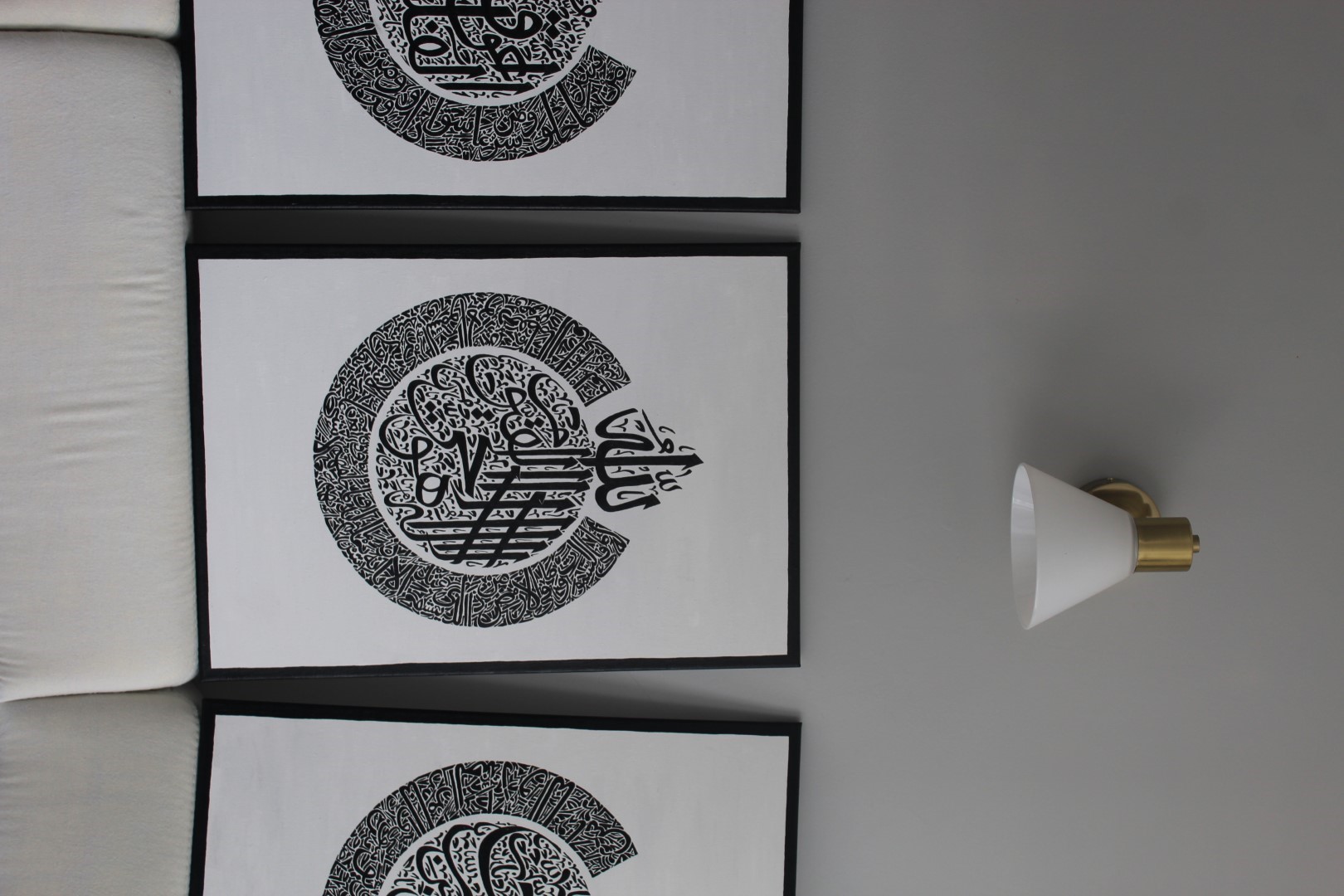
Learning Arabic often feels intimidating. New letters, unfamiliar sounds, multiple dialects, and a writing system that looks nothing like Latin scripts can quickly overwhelm even motivated learners. I've met many people , especially heritage learners , who feel they should know Arabic, yet don't know where to begin or how to reconnect with it.
I'm a Lebanese native Arabic speaker who learned French (in school), English, and Spanish later in life. Spanish, in particular, became my fourth language at the age of 20. What I learned through that journey, and through years of observing how people struggle with Arabic, is that languages don't become "hard" by nature. They become hard when we start from the wrong angle.
This article is for heritage learners, Arabs born or raised outside Arabic-speaking countries, and curious learners who want a clear, calm, and structured way to start Arabic , without panic.
First: Don't Panic
This may sound trivial, but it matters more than any textbook.
Many learners approach Arabic with stress: "I'll never understand this." "There are too many dialects." "I don't even know how to read."
Ironically, millions of people already read Arabic without understanding it. A clear example is Turkish Muslims who learn to read the Qur'an fluently, pronounce every letter correctly, yet don't understand the meaning at first. Understanding comes later.
Start With the Structure: The Root System
In my opinion, the most elegant entry point into Arabic is its word structure. Arabic is built around roots , often three-letter roots , that generate an entire ecosystem of meaning. Once you understand this, Arabic stops feeling chaotic and starts feeling logical.
| Root | Word | Meaning |
|---|---|---|
| K-T-B (writing) | كَتَبَ kataba | he wrote |
| كِتَاب kitāb | book | |
| مَكْتَب maktab | desk / office | |
| مَكْتَبَة maktaba | library | |
| D-R-S (studying) | دَرَسَ darasa | he studied |
| دَرْس dars | lesson | |
| مَدْرَسَة madrasa | school | |
| مُدَرِّس mudarris | teacher |
Instead of memorising thousands of isolated words, you're learning families of meaning. This approach appeals especially to analytical learners , the "nerds" , because it turns Arabic into a system rather than a mystery.
Tashkīl (Vowel Marks) Are Not Optional for Beginners
One of the biggest mistakes beginners make is skipping tashkīl , the short vowel marks written above and below letters.
Native speakers rely on context. Beginners don't have that luxury yet. If you don't know whether a word is pronounced kataba, kutiba, or kutub, you're guessing , and guessing slows progress. Starting with fully vocalized text removes ambiguity and builds correct pronunciation from day one. For a full breakdown of how they work, see our guide on Arabic tashkīl and harakat.
Reading Before Understanding
If I had to give one counter-intuitive piece of advice, it would be this: start by reading, even if you don't understand.
Read out loud. Train your mouth. Train your eyes. Get comfortable with the script. Understanding will follow. This is not unique to Arabic. I experienced something similar with French and Spanish , sound familiarity came before full comprehension. Your brain needs time to map symbols to sounds before it can attach meaning efficiently.
Dialects vs MSA: A False Conflict
Learners are often told they must choose: Modern Standard Arabic (MSA) or a dialect. In reality, Arabs constantly move between them.
| Register | Where it's used |
|---|---|
| MSA | News, formal writing, education, cross-dialect communication |
| Dialects | Daily conversations, social media, family life |
Here's something important that non-native learners often don't realise: when Arabs from different regions speak together, we instinctively adjust our speech toward MSA. We simplify dialectal words, choose shared vocabulary, and "meet in the middle." This means learning MSA is never wasted , even for speaking.
Why I Often Recommend Levantine Arabic
I may be biased, but Levantine Arabic (Lebanese, Syrian, Palestinian, Jordanian) sits relatively close to MSA in pronunciation. Most letters are clearly pronounced.
| Word | MSA | Levantine | Some Maghrebi |
|---|---|---|---|
| "red" | أحمر aḥmar | aḥmar | ḥmar (also means "donkey") |
This doesn't make other dialects wrong. But for learners who care about pronunciation clarity, Levantine can serve as a gentle bridge between spoken Arabic and MSA.
What Lyrics, Movies, and Games Taught Me About Languages
I didn't learn my other languages from textbooks alone. Here's what actually moved the needle:
Spanish (started at 20)
What truly unlocked Spanish for me was writing full song lyrics while listening , not filling blanks, writing everything. This forces intense listening and exposes weak spots immediately.
French
School gave me basic French, but also a strong Lebanese accent and very little up-to-date vocabulary. What changed everything was fully transcribing French movies, starting with animation (clearer diction, intentional speech). Then came sound replication , not just speaking, but imitating native rhythm and intonation.
English
English came through gaming and movies. Mostly passive at first. Active speaking arrived later at university with international friends , and yes, it felt awkward at the beginning. Even now, professional vocabulary continues to grow with use. That's normal.
Writing Arabic Without Fear
As a native speaker, I still double-check my Arabic writing when I want to avoid dialectal spelling and stick to correct MSA , especially when messaging family across regions.
For that, I use an Arabic grammar and spelling corrector like Sahihli, particularly when I want to make sure my writing stays clean and neutral rather than dialect-heavy. Tools like this are most useful after you've started writing , not before.
Practical Next Steps
- Learn the alphabet and sounds properly
- Read fully vocalized text daily, even without understanding
- Study root patterns, not isolated words
- Choose MSA + one spoken dialect and don't overthink the choice
- Use listening and transcription exercises regularly
- Be patient with speaking , it always lags behind listening, in every language
Frequently Asked Questions
Should I learn MSA or a dialect first?
Both , they aren't mutually exclusive. Start with MSA for structure, and add a dialect for daily conversation. Arabs themselves switch fluidly between them, and understanding MSA makes every dialect easier to pick up later.
Do I need tashkīl (vowel marks) when learning Arabic?
Yes, especially at the beginning. Native speakers can read unvocalized text by context alone, but beginners don't have that context yet. Fully vocalized text removes guesswork and locks in correct pronunciation from the start. You can drop tashkīl progressively as your reading improves.
Conclusion
Arabic rewards consistency more than intensity. You don't need talent, a perfect accent, or a strict plan. You need calm exposure, respect for the structure of the language, and trust in the process.
I've learned four languages, all differently, and Arabic , despite being my native tongue , has shown me something universal: languages open slowly, then all at once.
Start gently. Stay curious. And let Arabic meet you halfway.